Why Microchipping Matters for Cats
Many cat owners assume microchipping is only necessary for outdoor cats, but indoor cats can become lost too. A door left open, a broken screen, a stressful vet visit, severe weather, or a household change can all create opportunities for a cat to escape.
Cat microchipping can help:
- Provide permanent identification
- Increase the chance of being reunited if your cat is lost
- Protect indoor and outdoor cats
- Support identification if a collar or tag is missing
- Help shelters and veterinary teams contact you
- Give pet owners added peace of mind
A microchip does not track your cat’s location, but it can help identify them if they are found.
How Cat Microchipping Works
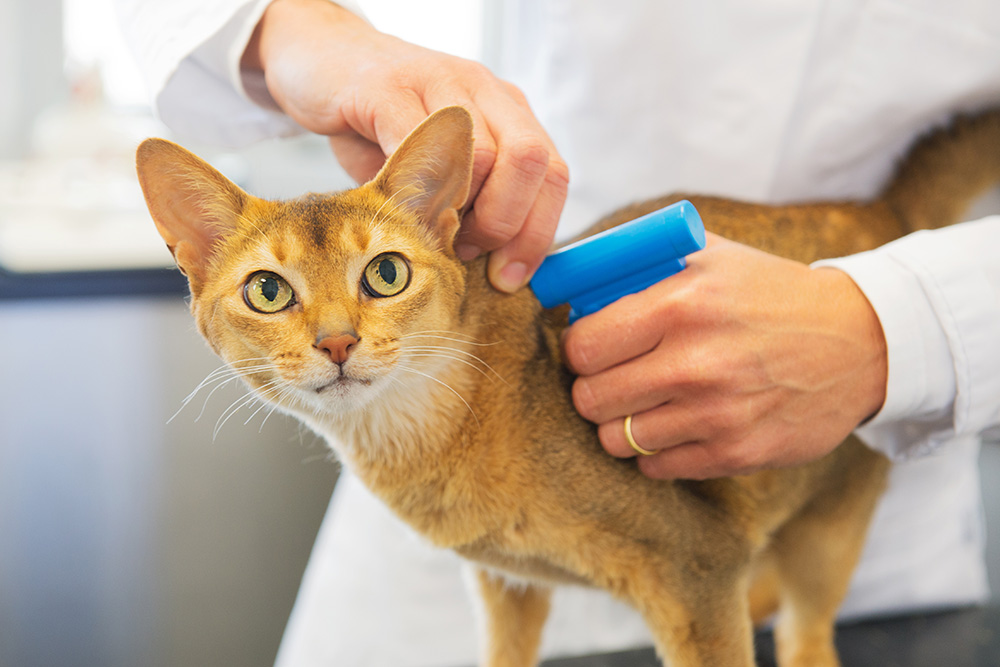
A microchip is a small identification chip, about the size of a grain of rice, placed under the skin between your cat’s shoulder blades. The process is similar to receiving an injection and is typically quick.
When a scanner is passed over the area, the chip provides a unique identification number. That number is connected to your registration information in a microchip database.
For a microchip to work properly, your contact information must stay updated. If you move, change phone numbers, or update your email address, it is important to update your cat’s microchip registration.
When Should a Cat Be Microchipped?
Cats can often be microchipped during a routine wellness visit, kitten visit, vaccine appointment, or at the time of a spay or neuter procedure. Our team can help you decide the best timing based on your cat’s age, size, health, and comfort.
Microchipping may be especially important for:
- Kittens
- Newly adopted cats
- Indoor cats
- Indoor/outdoor cats
- Cats who travel
- Cats who stay with pet sitters
- Cats in multi-pet households
- Cats who may be nervous or quick to hide
If you are not sure whether your cat already has a microchip, our team can scan for one during an appointment.
Microchips vs. Collars and ID Tags
Collars and ID tags are helpful, but they are not always enough. Cats can lose collars, tags can become worn, and some cats do not tolerate collars well.
A microchip provides backup identification that stays with your cat. For the best protection, many pet owners use both:
- A collar or tag for visible identification
- A microchip for permanent identification
Together, these can improve the chances of your cat being returned if they are found.
Keeping Your Cat’s Microchip Information Updated
Microchipping is only effective if your contact information is correct. After your cat is microchipped, make sure the chip is registered and that your phone number, address, and email remain current.
You should update your cat’s microchip information if:
- You move
- Your phone number changes
- Your email changes
- Your cat changes ownership
- Emergency contact information changes
If your cat is already microchipped but you are not sure whether the information is current, our team can help scan the chip and guide you on next steps.
Hospital and Mobile Microchipping Options
Cat microchipping is available at our Scottsdale animal hospital. In some cases, Phoenix Mobile Veterinarians may also be able to provide microchipping during an appropriate in-home visit.
If your cat needs additional preventive care, vaccines, lab testing, spay or neuter surgery, or a more complete medical evaluation, our team can help determine whether hospital care or mobile care is the best fit.
Schedule Cat Microchipping
If your kitten or adult cat is not microchipped, our team can help you add this important layer of protection.
Scottsdale Animal Hospital & Phoenix Mobile Veterinarians provides cat microchipping for families in Scottsdale, Phoenix, Paradise Valley, Fountain Hills, Mesa, Tempe, and surrounding areas.